Introduction to Istanbul Palaces: The City of Imperial Elegance
Istanbul, where continents meet and empires have risen and fallen, is home to some of the most enchanting palaces in the world. These grand structures once housed sultans, queens, and diplomats, each reflecting the political power, artistic taste, and lifestyle of its era. While Topkapi Palace remains the most famous, the city’s charm deepens with other imperial gems—Dolmabahçe, Beylerbeyi, Çırağan, and many more—each telling its own royal tale.
From ornate ceilings and European-inspired architecture to seaside balconies overlooking the Bosphorus, Istanbul Palaces embody a harmonious blend of East and West, history and luxury.
A Brief History of Ottoman and Byzantine Royal Residences
The Transformation of Istanbul Through Empires
Before the Ottomans, Byzantine emperors filled the city with splendid residences such as the Great Palace of Constantinople. However, the arrival of the Ottomans in the 15th century brought a new architectural identity—one infused with Islamic art, European influence, and imperial ambition.
The Symbolism of Palaces in Ottoman Society
Ottoman palaces were not merely homes for sultans; they were centers of governance, art, and diplomacy. The placement, design, and even garden layouts symbolized the strength and sophistication of the empire.
Dolmabahçe Palace – The Jewel of the Bosphorus
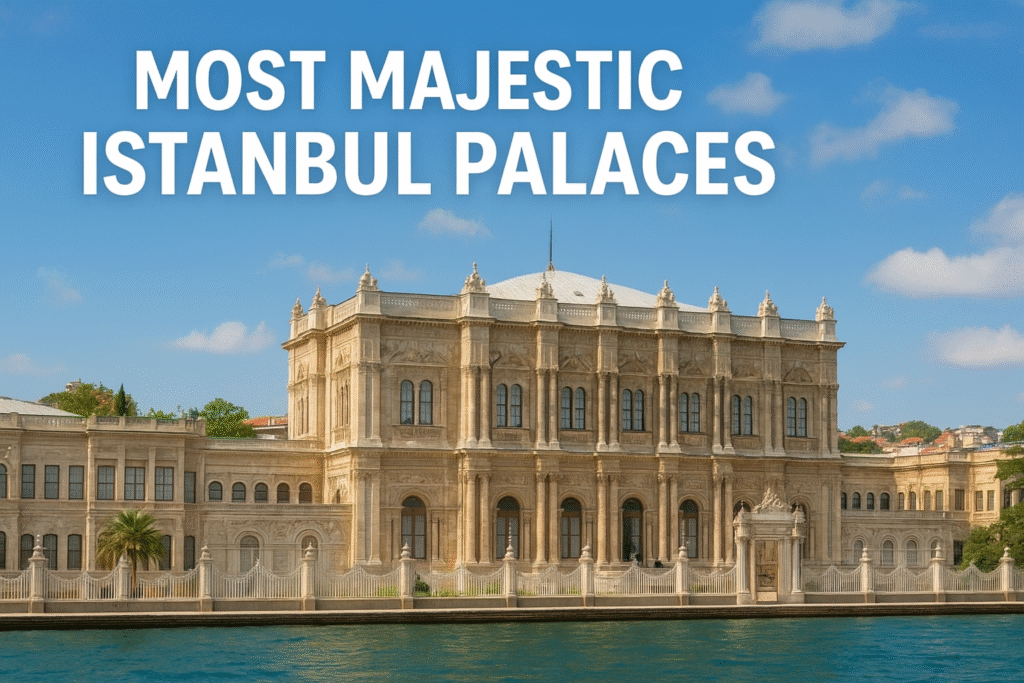
Built in the mid-19th century, Dolmabahçe Palace replaced Topkapi as the new administrative center of the Ottoman Empire. Overlooking the Bosphorus Strait, it exemplifies a perfect fusion of Ottoman tradition and Western neoclassical style.
Architectural Grandeur and European Influence
With over 280 rooms and 6 grand hammams, the palace displays baroque, rococo, and neoclassical elements. Every corner is a masterpiece, from crystal chandeliers to gold leaf ceilings.
Highlights: Crystal Staircase, Ceremonial Hall & Mustafa Kemal Atatürk’s Room
One of the largest chandeliers in the world adorns the Ceremonial Hall. The palace is also emotionally significant—it’s where Mustafa Kemal Atatürk, founder of modern Turkey, spent his final days.
Beylerbeyi Palace – The Summer Retreat of Sultans
On the Asian side of Istanbul stands Beylerbeyi Palace, a summer residence built under Sultan Abdülaziz. Surrounded by blooming gardens and seaside breezes, it served as a royal escape from the capital’s bustle.
The Story Behind Beylerbeyi’s Creation
Constructed in 1865, it was designed by architects Sarkis and Agop Balyan, the same family responsible for Dolmabahçe. The palace hosted several foreign dignitaries, including Empress Eugénie of France.
Design, Interiors, and Garden Beauty
The blend of marble, mother-of-pearl, and Oriental carpets reflects both Eastern delicacy and European grandeur. Its terraced gardens are perfect for a tranquil afternoon walk.
Çırağan Palace – From Ottoman Glory to Luxury Hotel
Once destroyed by fire, the Çırağan Palace has risen from its ashes as one of the world’s most luxurious hotels. Originally commissioned by Sultan Abdülaziz, it embodies opulence with marble facades and riverside charm.
A Tragic Yet Glorious History
The palace has witnessed both royal festivities and political intrigues. Its stunning riverside view made it one of the most photographed Ottoman landmarks.
Modern Çırağan: A Palace for Royal Experiences
Today, it operates as the Çırağan Palace Kempinski Hotel, offering guests a chance to live like royalty with world-class service and architecture that whispers history.
Yıldız Palace – The Last Royal Residence of the Ottoman Empire
Tucked away in a lush park above the Bosphorus, Yıldız Palace served as the final imperial residence of the Ottoman sultans. Built during Sultan Abdulhamid II’s reign, it represents a shift from coastal extravagance to secluded royal privacy.
A Palace Complex Hidden Among Gardens
Unlike the open grandeur of Dolmabahçe or Çırağan, Yıldız Palace is a sprawling complex made up of multiple pavilions, kiosks, and gardens. It housed not just the royal family, but also the state’s administrative offices, military quarters, and even a porcelain factory.
Historical Importance During Sultan Abdulhamid II’s Reign
Sultan Abdulhamid II ruled from this palace for over 30 years, turning it into the heart of Ottoman decision-making. Today, visitors can admire its collection of rare artifacts, European furniture, and breathtaking park views—a serene escape within Istanbul’s modern hustle.
Küçüksu Pavilion – The Fairytale Waterside Mansion
Small yet enchanting, Küçüksu Pavilion (Küçüksu Kasrı) stands gracefully on the Asian shore of the Bosphorus. It’s often called a “jewel box palace” for its intimate design and ornate decoration.
Architectural Delicacy and Artistic Details
Commissioned by Sultan Abdülmecid in the 1850s, the pavilion showcases baroque and rococo influences. Inside, every inch dazzles with hand-painted ceilings, gilded mirrors, and carved marble fireplaces.
A Glimpse into 19th-Century Ottoman Leisure
Unlike other palaces, Küçüksu wasn’t a residence—it served as a royal picnic and hunting lodge. Its tranquil setting and delicate architecture made it a favorite stop for Ottoman royalty seeking peaceful leisure by the water.
Ihlamur Pavilion – A Hidden Gem of Ottoman Nobility
Nestled between Beşiktaş and Nişantaşı, Ihlamur Pavilion is one of Istanbul’s most underrated treasures. Named after the surrounding linden trees (“ıhlamur” in Turkish), this charming estate offers a romantic glimpse into Ottoman aristocratic life.
From Imperial Getaway to Public Treasure
Built under Sultan Abdülmecid, it served as a private retreat where the Sultan met poets, artists, and foreign guests. The lush garden, with its fountains and flowers, makes it a popular spot for locals today.
European Romanticism in Ottoman Architecture
Its architecture blends neoclassical and rococo elements, creating an atmosphere reminiscent of 19th-century European villas. Ihlamur’s elegance lies in its simplicity and tranquil aura.
Maslak Pavilion – The Secluded Sanctuary of Sultans
Situated in the forested hills of Maslak, this pavilion was built as a hunting lodge and retreat for Sultan Abdulaziz. Far from the bustling palaces near the Bosphorus, Maslak Pavilion provided quiet solitude and nature’s calm.
The Rustic Royal Charm
Maslak’s architecture is more modest compared to Dolmabahçe, emphasizing harmony with nature over opulence. Its timber-framed design, large windows, and spacious verandas reflect the Sultan’s appreciation for simplicity.
Nature Meets Royalty: The Palace Gardens
Surrounded by lush woods, the palace gardens once hosted private royal gatherings. Today, visitors can enjoy guided tours that highlight the Sultan’s daily life and love for the outdoors.
Adile Sultan Palace – Istanbul’s Royal Educational Legacy
One of the few palaces built for an Ottoman princess, Adile Sultan Palace stands proudly on the Asian side in Kandilli, overlooking the Bosphorus. It’s not just an architectural gem—it’s also a symbol of education and empowerment.
The Only Palace Built for an Ottoman Princess
Commissioned by Sultan Abdülmecid for his sister Adile Sultan, the palace’s architecture is elegant yet dignified. It served as her home and a cultural gathering place for poets and scholars.
Transformation into a Modern Cultural Venue
Today, Adile Sultan Palace operates as a part of the Kandilli Girls’ High School and serves as a venue for cultural and educational events. Its halls echo with both history and progress, embodying Istanbul’s dynamic spirit.
Visiting Istanbul Palaces: Essential Tips for Tourists
If you’re planning to explore the Istanbul Palaces, preparation will make your journey smoother and more enjoyable.
Opening Hours, Tickets, and Dress Codes
Most palaces, such as Dolmabahçe and Beylerbeyi, are open from 9 AM to 5 PM, with Mondays typically closed. Tickets range from ₺150–₺650 (approx. $5–$20 USD) depending on the site. Modest attire is recommended out of respect for the cultural heritage.
Best Time to Visit for Photography & Less Crowds
Spring (April–June) and autumn (September–October) offer the best weather and fewer tourists. Early mornings are ideal for photography, especially around the Bosphorus palaces when the sunlight reflects beautifully on the water.
Preserving Istanbul’s Palaces for Future Generations
Istanbul’s palaces are living monuments that connect the past to the present. Ongoing restoration efforts aim to preserve their historical value while allowing modern visitors to appreciate their beauty.
Restoration Efforts and Cultural Importance
Organizations like the Turkish Ministry of Culture and Tourism continuously invest in restoration projects. Many palaces now host art exhibitions, concerts, and educational programs to keep their stories alive.
How Tourists Can Contribute to Heritage Conservation
Visitors can help by respecting museum rules, avoiding flash photography, and supporting local cultural foundations. Every ticket purchased contributes to preserving these architectural masterpieces for future generations.
FAQs About Istanbul Palaces
1. How many palaces are there in Istanbul?
Istanbul has over 20 historical palaces and pavilions, most dating back to the Ottoman period, though only about 10 are open to the public.
2. What is the most luxurious palace in Istanbul?
Dolmabahçe Palace is considered the most luxurious, featuring gold-plated ceilings, massive chandeliers, and intricate European-inspired design.
3. Can visitors stay overnight in any Istanbul palace?
Yes! The Çırağan Palace Kempinski Hotel offers a royal overnight experience where guests can stay in rooms once used by Ottoman royalty.
4. Which palace offers the best Bosphorus view?
Beylerbeyi Palace and Çırağan Palace both boast breathtaking panoramic views of the Bosphorus Strait.
5. Are Istanbul palaces accessible by public transport?
Absolutely. Most are easily reachable via tram, ferry, or bus. Dolmabahçe and Yıldız Palaces are within walking distance from central districts like Beşiktaş.
6. What is the best palace for history lovers?
Yıldız Palace provides a deeper insight into the late Ottoman Empire and Sultan Abdulhamid II’s reign, making it ideal for history enthusiasts.
Conclusion: Istanbul’s Palaces – Where Time and Beauty Stand Still
From the glittering halls of Dolmabahçe to the tranquil pavilions of Küçüksu and Ihlamur, Istanbul Palaces showcase centuries of imperial grandeur and artistic evolution. Each palace tells a story of ambition, beauty, and cultural exchange—offering travelers a chance to walk through the living pages of history.
For history lovers, photographers, or anyone seeking to experience Istanbul’s soul, these palaces are more than just monuments—they are timeless masterpieces that continue to define the city’s majestic skyline.
For more details on visiting hours and tickets, visit the official Turkish Museums website